
Dojinkai Karate, the independent style of Shotokan Karate. The chief instructor for Europe was Shihan Shojun Sugiyama.
He was a student of Yukio Matsumoto, who in turn was a direct student and associate of Gichin Funakoshi.
About GICHIN FUNAKOSHI
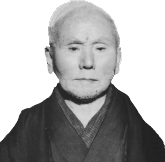
Born in Shuri, Okinawa, on November 10, 1868, Gichin Funakoshi is widely regarded as the father of modern karate. From an early age, he showed a deep interest in the traditional martial arts of Okinawa and began his training under some of the most respected masters of the time, including Anko Asato and Anko Itosu.
Alongside his work as a schoolteacher, Funakoshi devoted himself to the study, practice, and promotion of karate. At a time when Okinawan martial traditions were still little known outside the islands, he played a decisive role in introducing karate to a broader Japanese audience. In 1922, he was invited to Tokyo to demonstrate Okinawan karate at the First National Athletic Exhibition. His performance was so well received that he decided to remain in Japan in order to teach and spread the art.
During the following years, Funakoshi taught at universities, schools, and private dojo throughout Tokyo. Through his disciplined character, refined technique, and philosophical approach, he helped establish karate-do not only as a fighting system, but also as a path of personal development and character building. He emphasized humility, self-control, respect, and lifelong training as essential values of the art.
In 1936, his students established the Shotokan dojo in Tokyo, which later gave its name to one of the most influential styles of karate in the world. Funakoshi also authored important writings on karate, helping to preserve its principles and communicate its deeper meaning to future generations.
Gichin Funakoshi remained devoted to teaching and guiding students throughout his life. He passed away on April 26, 1957, leaving behind a legacy that shaped the worldwide development of karate-do and continues to inspire practitioners across generations.
About YUKIO MATSUMOTO
Born in Japan on August 29, 1911. Even as a child, he showed great interest in the history and culture of Okinawa, especially the traditional martial arts practiced in that region. At Waseda University in Tokyo, where he successfully completed his business studies in 1931, he met a fellow student from Okinawa in April 1928 who drew his attention to the karate school of Sensei Gichin Funakoshi, whereupon Matsumoto became his student.
At this time, Funakoshi was teaching at the historic Mesegiuk Dojo in Tokyo. In 1930/31, he was appointed Funakoshi's assistant sensei at three newly opened dojos: the Matsuzakaja Karate Dojo in Ueno and the dojos of the two universities, Takusoku and Waseda, in Tokyo. In 1934, he opened his first dojo in Terajima/Hamamatsu and continued to participate in Sensei Funakoshi's classes.
In 1938, he was drafted into the war against China and did not return until September 1945. In 1950, he opened a new dojo in the Hamamatsu region, this time in Kamoe. The dojo still exists today and is run by Master Stuyoshi, Sensei's son. Six years later, in 1956, he became the JKA representative for the Sugiyok region.
About SHOJUN SUGIYAMA
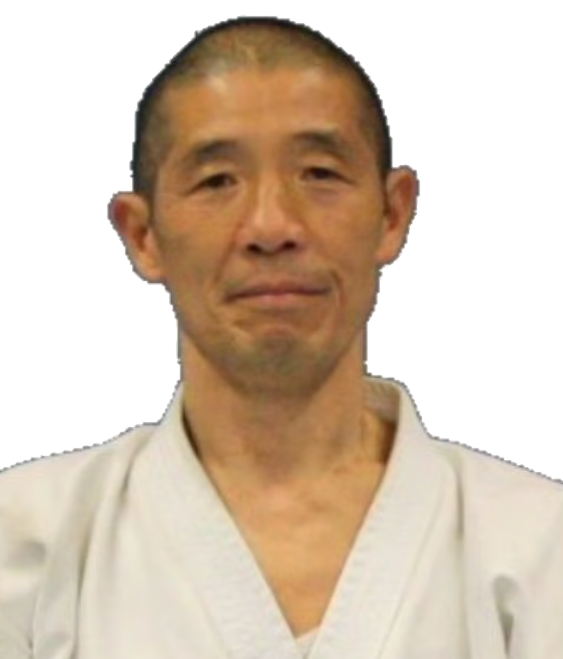
Shojun Sugiyama was born on September 23, 1950, in Hamamatsu, Shizuoka Prefecture, Japan. At the age of 12, he began practicing Shotokan karate under the tutelage of Master Yukio Matsumoto at his dojo in Hamamatsu. In 1968, he also attended the JKA Kourakuen Dojo near Suido-Bashi Station in Tokyo.
In 1974, he moved to London to attend college. He taught at various dojos and came into contact with other karate styles (Wado Ryu, Goju Ryu). In 1978, he moved to Venice, Italy, and opened several dojos there.
In 1987, he returned to Japan, where he continued his studies of Shotokan karate under the tutelage of his master, Matsumoto, while also practicing Shorinji Kempo.
In 1993, he returned to Venice.
Shojun Sugiyama passed away in March 2025.

